
Can weight gain affect your cycle? What’s normal and when to worry
Gained weight and your cycle changed? Learn how weight affects hormones, ovulation, and when it might signal something more.
AWARENESS

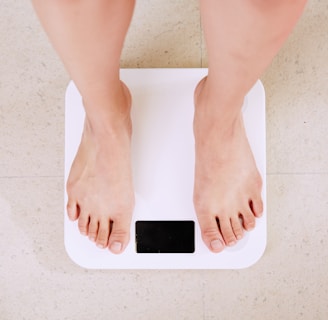
When your body weight changes, your hormone balance can shift, which may delay ovulation, change your cycle length, or affect how your period feels.
Why weight gain changes your cycle
Your cycle isn’t just controlled by your ovaries — it’s regulated by a sensitive hormonal system that responds to your overall body state.
Fat tissue plays an active role in hormone production, especially estrogen. When body fat increases, estrogen levels can shift out of balance. This can interfere with ovulation, which is the key event that determines when your period happens.
At the same time, weight gain is often linked to changes in insulin regulation. When insulin levels rise, it can further disrupt the hormonal signals that control your cycle.
The result is not random — it’s your body adapting to a new internal environment.
What changes you might notice
When ovulation becomes less predictable, your cycle follows.
Some people notice their period arriving later than expected. Others experience skipped cycles, changes in bleeding intensity, or new premenstrual symptoms. For some, the cycle becomes longer and less regular over time.
These changes can feel subtle at first — but they often reflect a deeper hormonal shift.
When it’s still normal — and when it’s not
Short-term changes in your cycle after weight gain can be a normal physiological response. The body often recalibrates once things stabilize.
But there’s a line where it stops being just an adjustment.
If your period becomes consistently irregular, disappears for a few months, or is accompanied by other symptoms like acne, unusual discharge, or persistent fatigue — it may indicate something more than just weight-related fluctuation.
In some cases, weight gain is linked to conditions like PCOS, where hormonal imbalance becomes more sustained.
The part most people miss
Most articles stop at “weight affects hormones.”
But in reality, what matters is not just the weight change — it’s how your body is responding to it.
Two people can gain the same amount of weight and have completely different cycle outcomes.
That’s because your cycle reflects your individual hormonal pattern, not just a number on a scale.
Where Muuza fits in
This is exactly where uncertainty starts.
You might be asking:
Is this just my body adjusting?
Or is something off hormonally?
Do I need to worry yet?
Muuza is designed for this moment — when symptoms are unclear and you don’t want to wait weeks for answers. Instead of guessing, you can combine your symptoms, cycle changes, and patterns to get a clearer direction in minutes. Not a generic article — but something tailored to what you are experiencing.
Quick reality check
If your cycle changed after weight gain, it doesn’t automatically mean something is wrong.
But it does mean your body is signaling a shift.
Understanding whether that shift is:
temporary
hormonal
or something that needs attention
is the part most people don’t get clarity on.
FAQ
Can gaining weight delay your period?
Yes. If ovulation is delayed due to hormonal changes, your period will come later.
Can weight gain stop your period?
In some cases, yes — especially if hormonal imbalance becomes more pronounced.
Will my cycle go back to normal?
Often it does, once your body stabilizes. But persistent changes should be looked at more closely.
How do I know if it’s something more serious?
If changes continue over time or come with other symptoms, it’s worth investigating further rather than waiting it out.